|
Ting-Yun (Sunny) Cheng Assistant Professor at the Kapteyn Astronomical Institute at the University of Groningen. Her research focuses on understanding how galaxies form and evolve structurally and chemically across cosmic time. She specialises in developing and applying advanced machine learning techniques to large astronomical datasets, with applications in galaxy morphology classification, inference of galaxy properties, identification of galaxy merger and lensing systems, and the detection and characterisation of hydrogen absorbers and primordial systems. |
 |
|
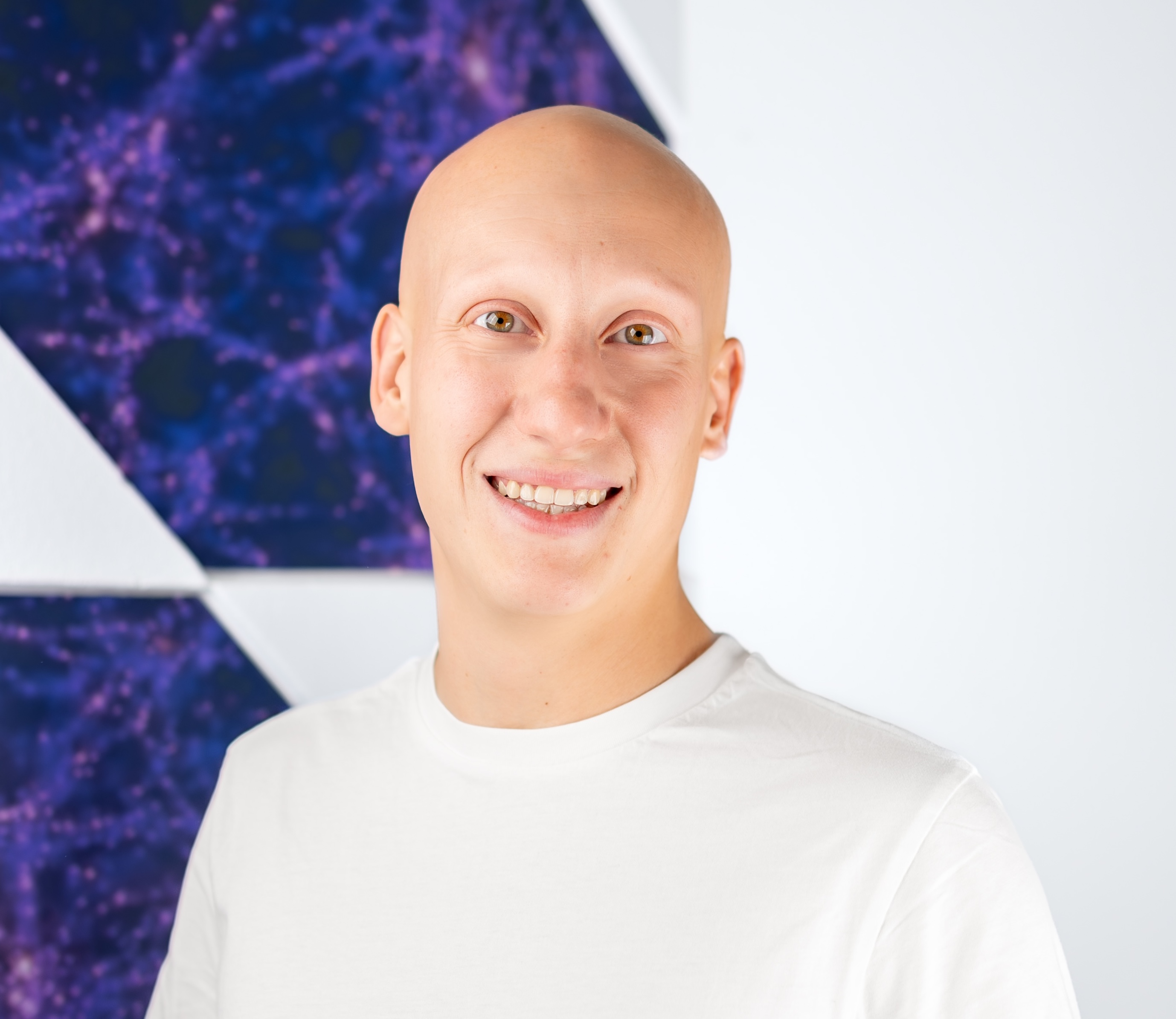
Antonio La Marca A postdoctoral Research Fellow at the European Space Agency (ESA), where his research focuses on studying statistical trends in galaxy evolution using the unprecedented dataset provided by the Euclid mission. He is also part of the ESA Data Science team, contributing to the development of the platforms and tools that enable the scientific analysis of Euclid data. He obtained his PhD at the University of Groningen, where he investigated the connection between galaxy morphology and the triggering of supermassive black hole accretion. His research extensively relied on machine learning techniques for galaxy image classification and the statistical analysis of large astronomical datasets. More broadly, He is interested in applying modern AI and data science methods to understand the physical processes driving galaxy evolution across cosmic time. |
 |
|
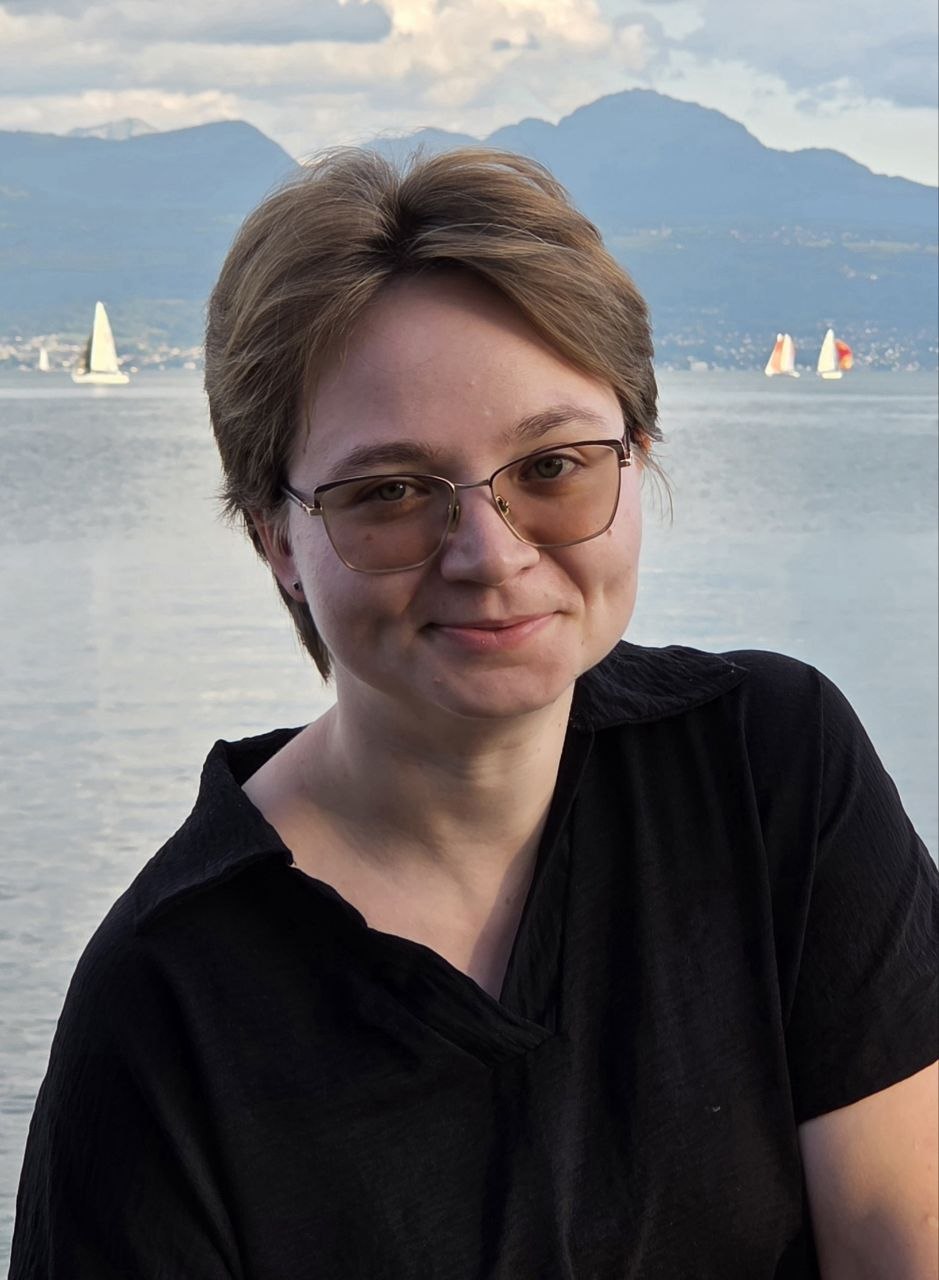
Alex Razim A postdoctoral fellow at the University of Nova Gorica, Slovenia, co-financed by the Marie Skłodowska-Curie postdoctoral network SMASH. Originally from Ukraine, Alex got her PhD at the University of Naples, Italy, and then worked as a postdoc at the Ruđer Bošković Institute in Zagreb, Croatia. Throughout her career Alex has been combining machine learning and data analysis techniques with astronomy, starting with unsupervised ML applications to the task of improving the quality of photometric redshifts, and continuing with applying various ML techniques to large astronomical datasets, in particular in preparation for the LSST survey. Her current interests are focused on classification and characterization of astronomical variability data in optical bands, of both periodic and transient sources. In the past several years, Alex has also been coordinating the Software Task Force of the LSST Transient and Variable Sky Science collaboration, and organizing multiple Intermediate Python workshops for the LSST community. |
 |
|
Carlo Schimd
|
 |
|
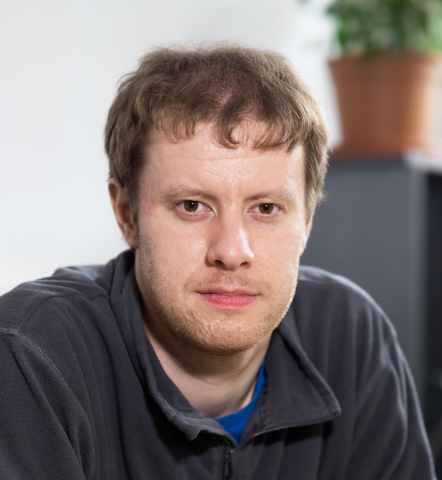
Will J. Pearson An assistant professor (adjunct) at the National Centre for Nuclear Research (NCBJ) in Poland. His scientific interests lie in galaxy formation and evolution and galaxy scale star formation, focusing on statistical studies. These studies primarily focus on galaxy mergers: finding mergers, classifying them, and studying their physical properties. This is done by exploiting the synergy between simulations and observations via the use of machine learning tools, both supervised and unsupervised. Will specialises in using machine learning tools to transfer knowledge we can learn from simulations and applying it to observations, to learn things we could not learn in other ways. |
 |
